

What is Scramble?
Scramble is a hybrid of Boggle and Wordle: you have a grid of letters, and you must find valid words by connecting adjacent letters (horizontally, vertically, diagonally). Each day features a new board.
The goal is to discover as many valid words as possible, perhaps with a minimum length or target words. As you guess, you get feedback on which words are accepted, which letters are used, and perhaps which are high-scoring.
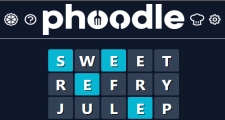



Scramble Online - Connect Letters and Find Hidden Words
Scramble is a daily word puzzle that combines the letter-hunting appeal of Boggle with the habit of returning for a fresh Wordle-style challenge. Instead of rearranging a handful of letters or guessing a single hidden word, you explore a grid and build words by connecting neighboring letters.
The interesting part is how many words can be hiding in plain sight. You might notice an easy three- or four-letter combination immediately, then discover a much longer word winding through the same part of the board. Scramble rewards a good vocabulary, but being able to recognize patterns and follow different letter paths is just as important.
How to Play Scramble Daily
The objective is straightforward: discover valid words by tracing connected letters across the grid. The challenge is finding combinations that aren't immediately obvious.
Explore Today's Letter Grid
Start by looking over the entire board. Instead of choosing letters from a rack, you'll work with letters already arranged in rows and columns. Look for familiar combinations, especially groups of vowels and consonants that commonly appear together in English words.
Connect Neighboring Letters
Build a word by following a continuous path through adjacent tiles. You can move horizontally, vertically or diagonally, which gives you eight possible directions from an interior tile. Each new letter must touch the previous one in your chosen path.
Submit Valid English Words
Once you've formed a word, submit it and check whether the game accepts your answer. Words must satisfy the puzzle's dictionary and length requirements. You cannot use the same tile twice within a single word path, although tiles can be used again when finding other words.
Keep Searching for More Words
Don't stop after finding the first few answers. Return to promising parts of the board, explore different directions and see whether a word you've already discovered can lead you toward another combination. The daily puzzle gives you a new arrangement to investigate.
The Rules That Make Scramble Interesting
Scramble isn't just about knowing English words. The position of each letter determines which words you can actually create.
Eight Possible Directions
Letters must be connected
You can move left, right, up, down or diagonally between neighboring tiles. A word doesn't need to follow a straight line. Its path can bend and change direction as long as every consecutive letter is adjacent.
No Reusing the Same Tile
Each path must use distinct tiles
Once you've included a tile in a word, you cannot return to that exact tile again within the same path. However, if the grid contains two separate tiles with the same letter, both may be used when the path connects them.
One of the easiest mistakes is searching only in straight lines. Imagine finding C, A and T next to each other. You might stop at CAT, but if another neighboring tile contains S, you could potentially extend the path to CATS. The same idea works with longer words and more complicated turns through the grid.
Scramble Strategies to Find More Words
After you've discovered the obvious answers, the real challenge begins. These are the techniques I would use to explore the board more systematically.
Look for Common Prefixes
Search for connected pairs such as RE, UN, IN or DE. Once you find a promising beginning, follow the surrounding tiles to see whether you can complete a longer word.
Recognize Word Endings
Groups such as ING, ED, ER and LY can be particularly useful. If you notice one of these endings, work backward through neighboring letters to see which words might lead into it.
Extend Words You've Found
When you discover a short word, check the tiles around its beginning and end. You may be able to turn a familiar answer into a longer one by adding another letter or following a different branch.
Explore One Area at a Time
Divide the board mentally into smaller sections. Search the corners, edges and center separately. This helps prevent you from repeatedly scanning the same obvious combinations while overlooking another part of the grid.
Follow Branching Paths
When several letters connect to the same tile, try each possible direction. A promising word beginning might lead to two or three different endings, so don't assume the first path is the only useful one.
Investigate Unusual Letters
Letters such as Q, X, Z and J often stand out. Check which vowels and consonants surround them. Even if they don't immediately reveal a word, their neighboring tiles can help narrow the possibilities.
Scramble vs. Boggle, Wordle and Scrabble
Scramble feels closest to Boggle because both games ask you to discover words by connecting neighboring letters on a grid. The challenge isn't simply recognizing a word; you must also find a valid route through the available tiles.
It shares the daily-puzzle appeal of Wordle, but the gameplay is quite different. Wordle focuses on identifying one hidden word through a series of guesses and color clues. Scramble encourages you to search for multiple words within the same board.
Compared with Scrabble Online, Scramble removes the need to place tiles, manage a letter rack or compete for premium board squares. Both games reward vocabulary and word recognition, but Scramble is primarily about discovering connected letter paths rather than constructing a board strategically.
If you enjoy rearranging letters instead of tracing them through a grid, try Scramble Words. That game uses mixed-up letters and missing word spaces, offering a different kind of word-building challenge.
Why the Daily Scramble Puzzle Is Worth Returning To
What I find appealing about a letter-grid puzzle is that the board rarely gives away everything at first glance. You might spot several easy words immediately, then spend much longer discovering that a familiar combination can be extended in an unexpected direction.
The most satisfying discoveries often come from revisiting an area you've already examined. A sequence that seemed useless earlier can suddenly make sense when you approach it from another tile. That makes Scramble a nice balance between quick word recognition and slower, more deliberate searching.
The daily format also gives the game a natural sense of progression. Instead of repeating the same arrangement, you return to a different collection of letters and start exploring again. Some boards will suit your vocabulary better than others, which is part of the challenge.
You don't need to find every possible word to enjoy the puzzle. Sometimes discovering one particularly well-hidden answer is more rewarding than collecting several obvious ones.
Frequently Asked Questions About Scramble
How do you play Scramble Online?
Find valid English words by connecting adjacent letters on the grid. You can move horizontally, vertically or diagonally, but each letter in your word must connect directly to the previous one.
Can I use the same letter twice?
You can use the same letter more than once if it appears on separate tiles. However, you cannot return to the exact same tile twice within a single word path.
Is Scramble the same as Wordle?
No. Wordle asks you to guess one hidden word using color-coded feedback. Scramble challenges you to discover multiple words by tracing connected letters across a grid.
Can I connect letters diagonally?
Yes. Diagonal connections are allowed, along with horizontal and vertical moves. The important rule is that consecutive letters must occupy neighboring tiles.
Why doesn't Scramble accept my word?
The word may not be included in the game's dictionary, may fail its minimum length requirement or may use an invalid path. Check that every consecutive letter is adjacent and that no tile is reused.
Is Scramble a daily word game?
Yes. This page loads the daily version of Scramble, giving you a fresh letter-grid challenge to explore.
How Many Hidden Words Can You Discover?
Start with the combinations you recognize, then explore the less obvious paths around the board. Try different directions, look for familiar prefixes and endings, and revisit areas you've already searched. The next word might be only one diagonal move away.
WordScramble.eu provides free browser games for entertainment and educational purposes only. Some games are self-hosted while others are embedded from third-party providers. All trademarks, logos, and game content remain the property of their respective owners. WordScramble.eu is not affiliated with, sponsored or endorsed by Hasbro, Mattel, or the official SCRABBLE® brand.
About · Contact · Disclaimer · Terms · Privacy Policy · DMCA
© 2026 | WordScramble.eu